Skip to content
Saturday, June 27, 2026
Latest:
  • Why where you live matters for heart health — even in childhood
  • FROM THE LABS: BCM and TCH researcher awarded up to $17.25 million to become part of The Aligning Research to Impact Autism (ARIA) IMPACT Network to accelerate clinical research for autism
  • Sitting at your desk all day? Get up and get moving!
  • FROM THE LABS: Dr. Kara Marshall has been awarded the 2026 McKnight Endowment Fund
  • Natural vs. artificial sweetener: Which is best for you?
Baylor College of Medicine Blog Network

  • Home
  • Momentum
    • About Momentum
    • Resources
    • Contributors
      • Taylor Barnes
      • Dana Benson
      • Molly Chiu
      • Julie Garcia
      • Graciela Gutierrez
      • Anna Kiappes
      • Aries Payne
      • Andy Phifer
      • Homa Warren
      • Melissa Tucker
    • Contact Us
  • From The Labs
    • About From the Labs
    • Follow From The Labs on Twitter
  • Policywise
    • About PolicyWise
    • Follow @BCMEthics on Twitter
  • The Stitch
    • About The Stitch
  • Progress Notes
    • About Progress Notes
    • Progress Notes Editors
    • Connect With Us
  • bcm.edu

fibroblast

From The Labs

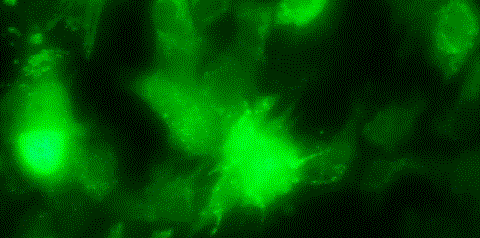
Partners in crime: Metastatic medulloblastoma recruits local fibroblasts to support its spread and growth

May 1, 2025 BMP,  brain cancer,  fibroblast,  leptomeninges,  medulloblastoma,  Metastasis,  PDGF,  Research,  tumor microenvironment

This novel discovery shows how tumor and non-tumor cells work together to create an environment that backs up cancer growth.

Read More
From The Labs

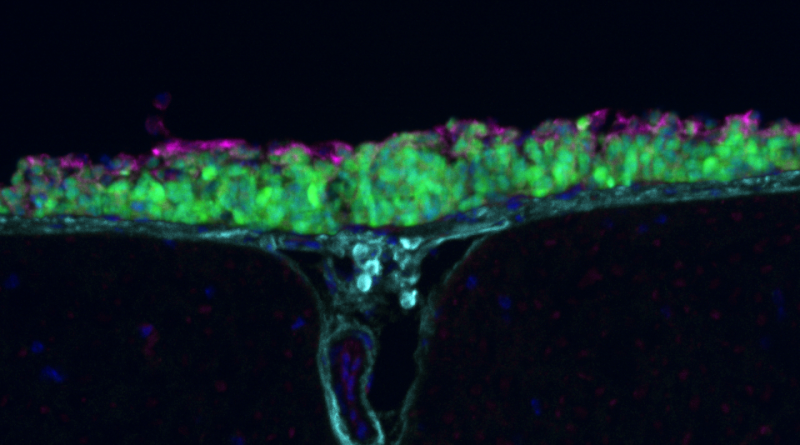
Innovative approach brings cell-reprogramming therapy for heart failure closer to reality

January 6, 2022 cardiomyocyte,  cell reprogramming,  endothelial cell,  fibroblast,  heart failure,  Research

A new cell reprogramming strategy can change large scar tissue in rat hearts into working muscle.

Read More

From the Labs: Image of the Month

two distinct neuronal populations in separate compartments of a microfluidic device. On the left, neurons express the 4R tau form (pink), which is associated with toxicity in Alzheimer’s disease, while on the right there are neurons from healthy individuals expressing normal tau (blue). In the central microgroove region of the device, neurons extend axons between the compartments. From the Labs: Tau travels between neurons

Healthy Habits: A DOC-umentary Series

https://www.youtube.com/watch?v=SlNiMWHUhbc

Archives

Search

©1998 - 2023 Baylor College of Medicine®
One Baylor Plaza, Houston, Texas 77030
(713) 798-4951