
Genome editing in rats enables more accurate ER+ breast cancer models
Rat disease models have played an integral role in scientific discovery and cancer research, including Nobel Prize-winning work from Charles Huggins on hormone therapy for prostate cancer in 1966. However, technical challenges in genetic engineering of rat models have limited their use in research, and over the decades, mouse models have become much more widely used.
Despite domination of the cancer research world, mouse models fail to accurately mimic some human diseases, such as estrogen receptor-positive (ER+) breast cancer, which accounts for 70% of breast cancer cases.
Most current mouse models of ER+ breast cancer use a transplanted human ER+ tumor, but those models lack the immune microenvironment that can be crucial to understanding tumor behavior and therapeutic response.
Rat models mimic human disease
To address this problem, Baylor College of Medicine researchers developed a novel method of somatic gene editing in mice described in a 2023 study. By making technological modifications to the CRISPR-Cas9 vector system, the team showed they could precisely edit oncogenes to generate tumor models.
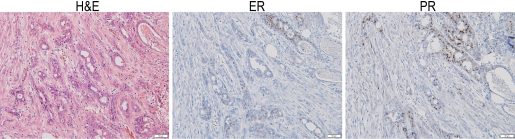
In a new study published in Proceedings of the National Academy of Sciences, Baylor researchers used that genome editing method to generate rat models of ER+ breast cancer covering the most common ER+ breast cancer gene mutations. They found that the rat models closely mimic human disease biology, response to therapy and immune microenvironment.

“Our findings show rat models are a powerful way to study cancers that are not well studied in mouse models, which opens new opportunities to study tumor biology, therapeutic response and immune interactions in clinically relevant models,” said first author Dr. Wen Bu, assistant professor in the Lester and Sue Smith Breast Center and the Department of Medicine at Baylor.
The rat genome is closer in size and structure to the human genome than the mouse genome, making it an ideal model to study human disease.
The rat models in this study faithfully reproduced key features of human ER+ breast cancer. Meanwhile, identical genetic editing in mouse models did not lead to ER+ tumors.

“Many human cancers, including breast and colorectal cancer, are better modeled in rats, and studies of these cancers will benefit from the technology used in our research. Our method is easily adaptable to other organs and can be used by others to develop their own models,” said co-senior author Dr. Yi Li, professor in the Lester and Sue Smith Breast Center, Department of Molecular and Cellular Biology and the Department of Molecular Virology and Microbiology.

“This work is just the beginning and will lead to many other downstream studies that will impact the field of cancer research,” said co-senior author Dr. Xiang Zhang, director of the Lester and Sue Smith Breast Center and professor of molecular and cellular biology. Zhang also holds the William T. Butler, M.D., Endowed Chair for Distinguished Faculty.
Bu, Li and Zhang are members of Baylor’s Dan L Duncan Comprehensive Cancer Center. Other contributors to this work include Tobie D. Lee, Meenakshi Anurag, Yongchao Dou, Yunfeng Ding, Zhiao Shi, Ruixin Xu, Lillian He, Alexandria Z. Bu, Chandandeep Nagi, Carolina Gutierrez, Jing Wang, Susan G. Hilsenbeck, Chonghui Cheng, Bing Zhang, Shixia Huang, Jianming Xu, C. Kent Osborne, Arun Sreekumar, Eric Chang and Chad J. Creighton. All authors are affiliated with Baylor College of Medicine.
This work was supported by the National Institutes of Health, National Cancer Institute, Department of Defense – Congressionally Directed Medical Research Programs, Cancer Prevention and Research Institute of Texas and the Dan L Duncan Comprehensive Cancer Center. See the publication for a full list of funding sources.
By Molly Chiu
Follow From the Labs on X, BlueSky and Instagram!
Would you like to receive From the Labs via email?
Follow this link.