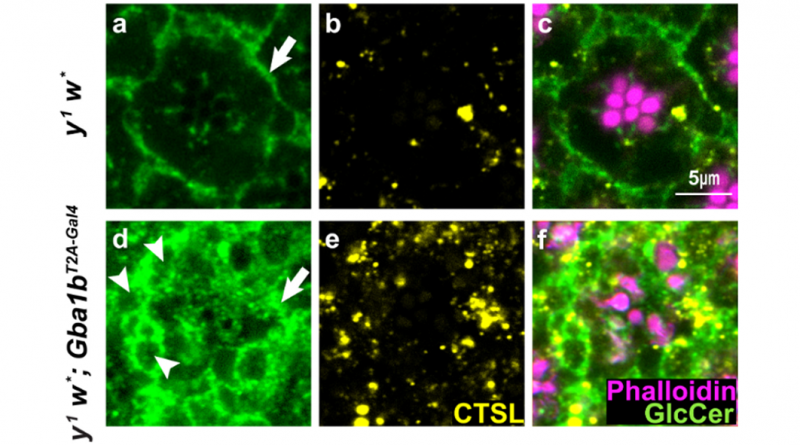

Partners in crime – genes ATP13A2 and GBA1 interact to drive neurodegeneration
The findings reveal promising biological pathways that could be explored in future therapies.
Read More
The findings reveal promising biological pathways that could be explored in future therapies.
Read MoreThe findings offer new possibilities to restore in people disruptions in dopamine that have been associated with disorders such as addiction, depression, sleep disorders and schizophrenia.
Read MoreThe Causal Pivot accounts for genetic diversity within a disease and can be adapted to the clinic of tomorrow.
Read MoreThis model can help identify new disease biomarkers and test therapies that could alter its progression, maybe even prevent the condition.
Read MoreAllison Toepperwein and her husband Steven share their experience with deep brain stimulation for the treatment of movement disorders.
Read MoreThis work potentially contributes an important new piece of the puzzle regarding the development of Alzheimer’s disease.
Read MoreDisruption of sphingolipid metabolism led to neurodegeneration in animal models, revealing a new molecular path to Gaucher’s disease.
Read MoreFor decades, researchers and physicians at Baylor College of Medicine and beyond have been working to find the cause and cure for movement disorders such
Read MoreThe roadmap that may lead to Parkinson’s disease has a number of ‘landmarks,’ gene variants and cellular defects known to be associated with the disease.
Read More“Coach Neuendorff, you might as well get that ambulance ready, because I’m coming in first! I don’t care what it takes!” I was 14 with
Read More