Skip to content
Sunday, June 7, 2026
Latest:
  • Image of the Month: Tau travels between neurons
  • How looksmaxxing breeds body dysmorphia
  • Is creatine for you?
  • CPRIT awards more than $12 million to BCM for cancer research
  • Ready or not: How to know if your child can handle a sleepover
Baylor College of Medicine Blog Network

  • Home
  • Momentum
    • About Momentum
    • Resources
    • Contributors
      • Taylor Barnes
      • Dana Benson
      • Molly Chiu
      • Julie Garcia
      • Graciela Gutierrez
      • Anna Kiappes
      • Aries Payne
      • Andy Phifer
      • Homa Warren
      • Melissa Tucker
    • Contact Us
  • From The Labs
    • About From the Labs
    • Follow From The Labs on Twitter
  • Policywise
    • About PolicyWise
    • Follow @BCMEthics on Twitter
  • The Stitch
    • About The Stitch
  • Progress Notes
    • About Progress Notes
    • Progress Notes Editors
    • Connect With Us
  • bcm.edu

pediatric liver cancer

Doctor examining a child's neck.
From The Labs

Study reveals how a rare pediatric liver cancer emerges

March 12, 2026 hepatoblastoma,  hepatoblastoma with carcinoma features,  hepatocellular carcinoma,  pediatric liver cancer,  Research,  WNT

The findings provide a new developmental model of pediatric liver cancer

Read More


From The Labs

Novel combination therapy offers promising results for treatment-refractory hepatoblastoma

February 20, 2024 Chemotherapy,  HDAC,  hepatoblastoma,  panobinostat,  pediatric liver cancer,  Research

Hepatoblastoma (HB) is the most common liver cancer in children. Researchers and physicians in the field are concerned because in the last decade HB has

Read More
From The Labs

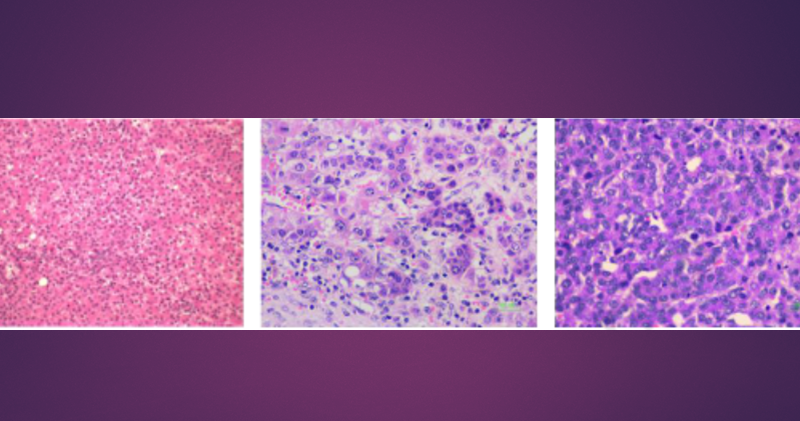
Molecular profiling identifies new high-risk subtype of pediatric liver cancer

May 24, 2022 cancer treatment,  diagnostic algorithm for cancer,  hepatoblastoma,  hepatocellular carcinoma,  molecular profiling,  pediatric liver cancer,  Research

The findings support a diagnostic algorithm to identify the cancer subtype and guide specialized treatment.

Read More

From the Labs: Image of the Month

two distinct neuronal populations in separate compartments of a microfluidic device. On the left, neurons express the 4R tau form (pink), which is associated with toxicity in Alzheimer’s disease, while on the right there are neurons from healthy individuals expressing normal tau (blue). In the central microgroove region of the device, neurons extend axons between the compartments. From the Labs: Tau travels between neurons

Healthy Habits: A DOC-umentary Series

https://www.youtube.com/watch?v=SlNiMWHUhbc

Archives

Search

©1998 - 2023 Baylor College of Medicine®
One Baylor Plaza, Houston, Texas 77030
(713) 798-4951