Reinventing remote healthcare on Earth and beyond: synergy between space and terrestrial medicine
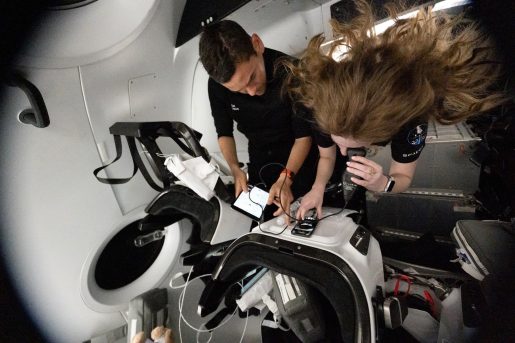
The Translational Research Institute of Space Health (TRISH) is driving the new space economy to accelerate human exploration and health discovery, shaping the future of human performance in space and in extreme environments on Earth.
Partnered with NASA’s Human Research Program (HRP) to solve the health challenges of human deep-space exploration, TRISH is providing solutions to health risks in space that can also benefit healthcare on Earth. Since its inception in 2016, TRISH has performed and supported research across fields and industries. Today, that momentum is reflected in a portfolio of efforts that are pushing boundaries, refining tools and actively strengthening the foundation for safer, more capable exploration.
Protecting and tracking health data with Hermes
Hermes is a health-monitoring system that collects data, such as heart rate, temperature and respiratory rate, from various sensors to assess an individual’s health. The platform is customizable, allowing users to connect different types of sensors and choose how the data transfer occurs. The collected data helps inform treatment and intervention when needed, as well as contributing to researchers’ long-term understanding of how humans react to extreme environments.
The usual healthcare and performance monitoring systems optimized for use on Earth can be challenging to use in space, as deploying hardware or transferring data between spaceflight vehicles and on-Earth bases isn’t always an option. TRISH builds a specialized infrastructure where none exists, making it easier for medical professionals to interpret health data seamlessly and act in medical emergencies.
On Earth, Hermes can also service areas where medical infrastructure, such as hospitals, ambulances and charting software, is not fully developed or comprehensive, as seen in underserved rural areas. While primarily designed with space in mind, Hermes can serve users in a wide array of scenarios, such as military personnel, hospitals, clinics, underserved communities – essentially any medical service that needs mobile or remote healthcare. TRISH has supported the creation of two Hermes prototypes, which successfully showcased their capabilities in lab demos in 2025. The team will continue to develop and test Hermes, including testing digital assistance, to ensure its reliability during real space missions and in remote areas on Earth where medical support is limited.
“We’re developing Hermes as a platform that enables that infrastructure in a remote, austere environment,” said Jimmy Wu, TRISH deputy director and chief engineer. “And whoever is using Hermes, whether it’s the astronaut themselves or the people responsible for taking care of that person in space, can customize the platform and select what works best for them.”
The importance of monitoring ICP in space, on Earth
Intracranial Pressure (ICP) refers to the pressure created by the brain, cerebrospinal fluid, and blood within the fixed space of the skull. Changes in ICP can affect brain function and how fluids move between the brain and eyes. In microgravity, these fluid dynamics shift, and altered ICP may contribute to Space-Associated Neuro-Ocular Syndrome (SANS), a condition that causes vision changes in astronauts during spaceflight, posing a risk for long-duration space missions.
On Earth, ICP is measured accurately only through invasive techniques such as lumbar punctures or surgically implanted monitors, methods that are unsuitable for spaceflight due to their risks and resource requirements. Ideally, astronauts would be able to measure ICP non-invasively. A reliable, non-invasive technology would not only aid astronauts, but could also improve care for patients on Earth who require ongoing ICP assessment due to neurological conditions.
“Making something that is easier to implant and measure long-term will have benefits in disease conditions in and outside the ICU. Having something non-invasive would be great,” said Dr. Mohammad Hirzallah, assistant professor of neurology at Baylor College of Medicine and clinical advisor for TRISH.
Furthermore, a non-invasive, mobile method would also improve access to healthcare for patients in remote areas where access to hospitals, for an intervention such as a spinal tap, is limited.
Gamification as a tool for astronaut skill retention
As if training to be an astronaut wasn’t difficult enough, spaceflight participants also need to understand and remember healthcare procedures. On top of their own specialized expertise, it is essential for astronauts to know how to conduct medical exams and intervene when needed. To ensure that all information is learned and remembered accurately, researchers have developed video games as a method for training. Turning astronaut training into engaging games is both a fun and effective way to help astronauts keep critical skills sharp before missions.
One example of a medical test they will have to conduct independently is an ultrasound. Specialized portable ultrasound has been developed to be intuitive and easy to use, as astronauts won’t have access to real-time communication with medical experts. Whether the training is medical, technical or educational, the interactive approach can enhance motivation and knowledge retention.
“It’s really an alternative methodology for training,” Wu said. Researchers are unsure whether the approach could be considered superior to the training we see in conventional classrooms, but finding a way to ensure that members of the crew can most easily recall vital information is essential.
Research collaboration with the Australian Antarctic Division
What do astronauts and Antarctic scientists have in common? More than one would think, especially when it comes to surviving in remote environments.
TRISH’s partnership with the Australian Antarctic Division (AAD) provides a platform to test technology, tools and methods that benefit both Antarctic researchers and future space crews. Whether in space or Antarctica, teams face similar physical and behavioral stressors.
Arctic researchers spend extended periods, from several weeks to many months, disconnected from broader communities, with limited resupply options. Preparing for such expeditions mirrors many aspects of planning for long-duration spaceflights. Living and working in confined quarters with the same team members can strain an individual’s mental health, influence group dynamics and affect overall mission performance.
Through ongoing and completed studies, TRISH aims to support small, isolated groups by developing new tools and methods to manage isolation, maintain healthy team dynamics and monitor their own well-being in environments where external support is limited.
“It was in our mutual interest to advance these tools. This can also help us here on Earth because there are many remote places that don’t have full access to the type of behavioral healthcare necessary in these extreme environments like Antarctica and space,” said Dr. Rihana Bokhari, assistant professor at the Center for Space Medicine at Baylor and scientific research director at TRISH.
As space exploration evolves, TRISH will continue to catalyze solutions for human performance in extreme environments on Earth. Acting as the critical link between the space and health industries, TRISH focuses on operational needs, mission-critical tools and the next generation of leaders. From health monitoring tools like Hermes, to researching ICP, to gamifying training and forging new research collaborations, TRISH advances innovations and collaborations that enable all humans to thrive, wherever they explore with rigor, agility and efficiency.
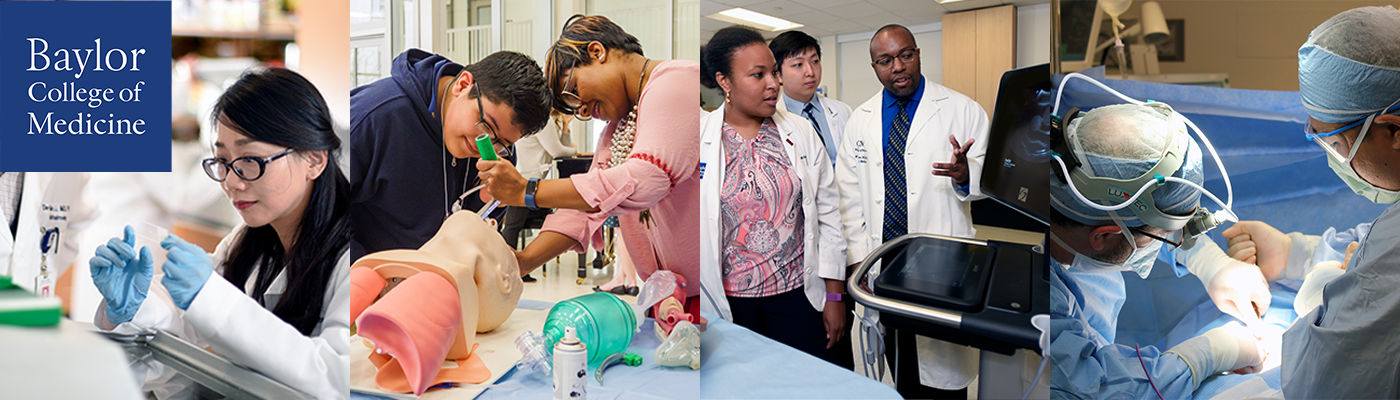
TRISH is based at Baylor College of Medicine, a leading center for biomedical innovation. With MIT and Caltech as consortium partners, TRISH draws on world-class expertise in human health and applied science to advance space health research.
By Keri Ogle, communications fellow at the Translational Research Institute for Space Health