Fuel Your Adventure: Healthy Road Trip Snack Ideas
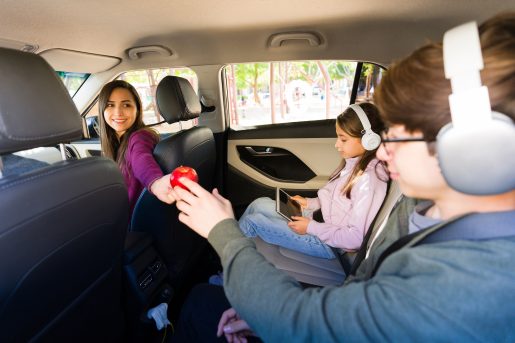 When you’re planning your next summer road trip, you might be thinking about what to pack for snacks. Senior registered dietitian Claire Edgemon answers common questions about what goodies you should look for when you make a pit stop, how much snacking is too much snacking while the miles roll by, and more.
Question: What are some healthy shelf-stable items that you don’t have to worry about keeping cold on a long trip?
Answer: Things like jerky or meat sticks, packets of tuna, chicken or salmon, protein bars, nuts, nut butter on whole grain bread, and fruits such as banana, apple, orange, plum, peach or pear.
Q: If you do decide to bring something cold, what’s the best way to make sure things stay cool? How long can they stay in a cooler before they need to go into a fridge/freezer?
A: You would do the same thing that you would do at home – keep food out of the danger zone (40°-140°F). Pack the food in an insulated cooler so that the food stays below 40°F. Remember if the food is above room temperature for more than an hour, discard.
You can pre-cool the cooler by keeping it in the house and adding ice first. Then empty the cooler and add the food, with raw or highly perishable foods on the bottom, prepared meals in the middle and snacks on top. Consider using pre-frozen water bottles or sugar-free sports drinks as ice packs.
Q: What snacks provide sufficient protein/fiber?
A: Try things like yogurt with fruit and nuts, a cheese stick with nuts and fruit, a high-fiber tortilla with deli meat, cheese, avocado, a homemade snack pack with cubes of hard cheese, rotisserie chicken, cured meats, and fruit or nuts, and ranch dip made with plain Greek yogurt or cottage cheese with ranch seasoning and raw vegetables.
Q: How much snacking is too much snacking if you’re just sitting down all day and not moving much?
A: Even if you are not moving much, your body still needs energy for heart beating, lungs breathing and other functions. I recommend eating meals and snacks with protein and fiber every 3-4 hours.
Q: If you’re at the gas station to refuel, what is one snack you can pick up that will give you sustenance but is still somewhat healthy? Same with beverages?
A: Gas stations have many options these days. You could get a protein shake or bar with 20-30 grams of protein and low sugar, yogurt and nuts, hard-boiled eggs, tuna or a cheese stick. Some gas stations have fresh fruit such as bananas, oranges or apples. For beverages, stick to hydrating options like water, sugar-free sports drinks, low-fat or fat-free milk or decaffeinated coffee or tea with sugar substitutes.
Q: What macronutrient (s) does your body need the most of to stay awake on a long drive?
A: I recommend all the macronutrients at every meal or snack. Carbohydrates, like fruit, vegetables and whole grains, provide quick energy. Protein and healthy fats, like nuts, nut butters and avocado, provide sustained energy. Protein and fiber take longer to digest, so they help you feel full longer.
Q: Should you stay away from certain kinds of snacks to delay getting drowsy?
A: Avoid heavy, greasy fast food because it slows digestion and diverts blood from the brain, making you sleepy. Avoid sugary beverages like soda, juice, coffee drinks and sweet tea, and highly refined carbohydrates like cookies and saltines, because the sugar is absorbed quickly, but there is nothing to sustain it, so blood sugar drops quickly, causing a decrease in energy. Avoid caffeine because it may overstimulate the bladder, which can mean more bathroom stops. (Side note: Energy (calories) comes from food. “Energy” drinks have sugar and caffeine. Caffeine is a stimulant. Regular energy drinks do have sugar, so you are getting some calories, but sugar-free energy drinks do not provide energy, just the stimulation from caffeine.)
Also, it may be helpful to avoid eating smelly foods like tuna and eggs in the car to prevent lingering odors. It is a good idea to get out and walk around every two hours when on a long driving trip, so you can use that time to eat a “smelly” food.
Don’t forget to pack hand sanitizer, hand wipes and paper towels to use before eating.
By Anna Kiappes