
Needle phobic? Try nasal spray for anaphylaxis
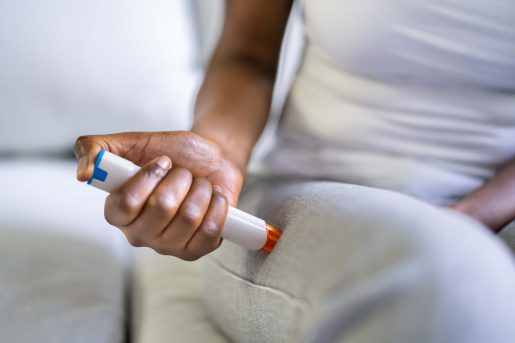 Epinephrine autoinjectors have been used for first line treatment of anaphylaxis and severe allergic reactions for many years. Recently, the FDA also approved an intranasal option, Neffy – a gamechanger for those who are needle phobic.
“It’s the same drug, but the route of administration is different,” said Dr. Aikaterini Anagnostou, professor of pediatrics – allergy and immunology at Baylor College of Medicine and Texas Children’s Hospital. “It treats anaphylaxis and allergic reactions, but instead of a shot, you spray it up the nose.”
Adults and children can use the nasal spray or the autoinjector. It comes down to which they prefer and are more likely to carry.
The epinephrine nasal spray currently has a longer shelf life than autoinjectors, with an average shelf life of up to 30 months, rather than the injectable’s shelf life of up to 18 months. It also withstands higher temperatures (up to 122 degrees).
“Heat is always a concern, and we are grateful for devices that can withstand it, especially in places like the South that get very warm during summertime,” Anagnostou said.
Patients interested in Neffy must always carry their nasal spray if at risk of anaphylaxis. Patients also must be able to recognize symptoms of severe allergic reactions and anaphylaxis and receive training before use.
“It’s pretty easy to use, but some people may decide to prime it, and if you prime it, you lose the only dose in there. With inhalers, patients prime them before use, but with this, you should not do that. Just open it and use it in an emergency,” Anagnostou said.
More options for patients to have individualized treatment allows people to make decisions based on preference. Researchers also are investigating other routes to treat anaphylaxis, including an ongoing clinical trial studying sublingual epinephrine, which includes a film going under the tongue.
“The nasal spray is a nice alternative to autoinjectors as we move onto more personalized patient care. If a patient is needle phobic and is not going to carry their autoinjector or use it in the event of a reaction, I feel much better that they can carry something they will use in an emergency to treat their reaction,” Anagnostou said.
By Homa Warren