
Spring cleaning safety
Spring is on the horizon, and it might be time to clean up around the house. Before you begin your spring cleaning, learn more from a Baylor College of Medicine toxicologist about how to do so safely by taking caution for yourself others in the home.
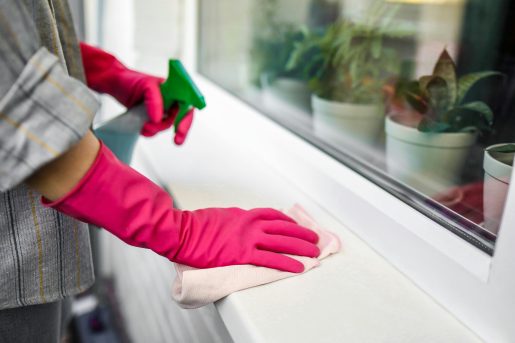 One major hazard is drain cleaners in the home. Drain cleaners contain caustic material with a high pH, and they work because they destroy tissue and materials in the drain. They melt the hair, fat and anything else that clogs the drain to unclog it. Problems arise when an adult, or more commonly a child, gets ahold of it and takes a swig of the product, which essentially melts the tissue upon contact.
“Those patients come to the hospital and if they’re lucky, they may just get a GI doctor to put a camera down their esophagus to see what kind of damage they have. If they’re unlucky, they have to go to the operating room. Drain cleaners can perforate your esophagus/bowels, cause you to become septic or cause other issues,” said Dr. Stephen (Alex) Harding, assistant professor in the Henry J.N. Taub Department of Emergency Medicine at Baylor.
He recommends using drain cleaner all at once after purchasing so it does not stay in the house, ensuring children cannot get ahold of it.
You might see trends online of people taking multiple cleaning products of all different colors and spraying them into the sink or toilet because it looks aesthetically pleasing, but you must avoid combining different cleaning products. If you combine bleach and acid, it can liberate chlorine gas, which causes severe respiratory problems, especially when cleaning in an enclosed space like a bathroom. Combining bleach with ammonia can release chloramine gas, which is similarly caustic.
“Some cleaning products have ammonia, or sometimes you get it from standing urine in outhouses or porta potties. The standing urine breaks down into ammonia compounds,” Harding said.
Common precautions for using cleaning products in the home include:
- Running the fan in the bathroom: Most fans will have good ventilation for strong products.
- Limiting the time you spend in an enclosed space: Take breaks so you don’t become lightheaded while cleaning.
- Not combining multiple products: If you’re going to do one thing, do that well and come back later to use the other product(s).
- Being aware of the products you purchased and where you keep them.
For households with kids, keep cleaning products out of reach, whether they are locked up or on a high, unreachable shelf to prevent issues. Adults that might take cleaning product from work should be cautious, especially when putting something in a water bottle instead of taking the entire product home.
“If they put that bottle on the counter at home and don’t tell the rest of the family this cleaner isn’t water, someone could take a swig and their mouth will start burning, resulting in an ER visit,” Harding said.
If something is sold legally, it still might not be safe, so know what products are in the home and make sure they are in a safe space away from children.
Spring cleaning also might entail cleaning outside the home, such as cleaning cars, polishing car rims, cleaning the yard or cleaning brick. Be aware of pesticides and insecticides which may be toxic to humans and pets, as well as strong acids to clean brick or rust (like hydrofluoric acid) that can become problematic.
If you have a question about an exposure to something, go online and type the name of the product plus SDS (for safety data sheet), which will show a required document that companies publish with first aid procedures, ingredients and when to go to the hospital. The poison control center is free and available to all humans nationwide: 1-800-222-1222. A fee might be required for animals exposed.
When doing home improvement projects that cause particulate matter, a mask like an N95 is helpful. Masks are not necessary for basic cleaning tasks but can be worn for comfort. Gloves are convenient to prevent contact with substances, especially if you have sensitive skin. Avoid prolonged contact with those substances, washing them off promptly to avoid rash issues and raw skin.
“An ounce of prevention is worth a pound of care, so if you keep everything locked away so your child or pet can’t get into it, then you don’t have to deal with the issue of when to bring them to the hospital or how to treat them,” Harding said.
By Homa Warren