Fruit fly pigmentation helps researchers discover genes that control brain dopamine and sleep
Dopamine in the brain influences movement, learning, motivation and sleep. In humans, problems with dopamine are linked to conditions like Parkinson’s disease, depression and sleep disorders. While scientists know a great deal about how dopamine works in the brain, they know less about how the body controls dopamine levels. Understanding this could help treat diseases where dopamine is disrupted.
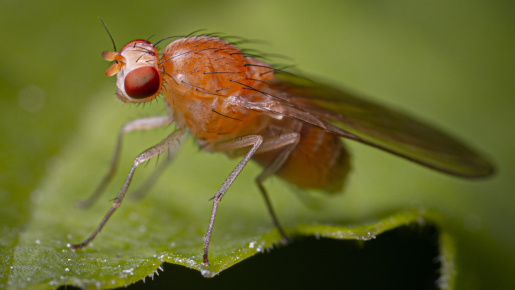
In a new study published in iScience, researchers at Baylor College of Medicine and the Duncan Neurological Research Institute (Duncan NRI) at Texas Children’s Hospital worked with the laboratory fruit fly to find new genes involved in regulating dopamine levels. The fruit fly is a powerful model to study brain function. Not only do flies and people share many genes, but also the flies’ short life makes them ideal for large-scale experiments.
A visible clue of dopamine levels

“In addition to using dopamine to modulate brain activity just like humans do, flies use it to make melanin, the pigment that colors their outer shell,” said corresponding author Dr. Shinya Yamamoto, associate professor in the departments of molecular and human genetics and of neuroscience at Baylor and investigator at the Duncan NRI. “This suggested that changes in dopamine could show as changes in body color, a visible clue we could follow just by looking at these animals.”
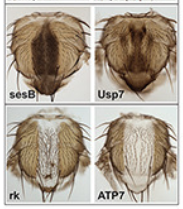
The researchers used RNA interference (RNAi) – a technique that ‘silences’ specific genes – to screen hundreds of genes to see which ones altered pigmentation. Then, they checked whether those genes also changed dopamine levels in the brain and whether they influenced behaviors like sleep.
“We began by working with more than 450 genes that have been proposed to affect flies’ body color. Using our gene-silencing technique, we confirmed 153 that consistently changed pigmentation,” Yamamoto said.
Interestingly, 85% of these genes are conserved in humans, and more than half are linked to neurological disorders such as autism, epilepsy and intellectual disability.”
Next, the team tested whether these pigmentation genes affected behavior. They measured movement and sleep patterns in flies in which these pigmentation genes were silenced in dopamine-producing neurons. Of the original 153 genes, 50 were linked to unusual locomotion or sleep, suggesting a possible role in brain function.
The researchers focused on 35 of these genes because they also were present in people and strongly affected pigmentation and behavior in flies. Eleven genes significantly changed dopamine levels, mostly reducing it. However, there was no clear link between flies’ outer shell color and dopamine level, indicating that pigmentation is not a perfect proxy for dopamine.
We then narrowed our study to two genes, mask and clu. Both genes reduced brain dopamine when silenced,” Yamamoto said.
“Further experiments revealed that mask lowers dopamine by reducing the expression of tyrosine hydroxylase, the key enzyme for dopamine synthesis. The clu gene also reduced dopamine, but through a different mechanism.”
Silencing mask changed sleep patterns in flies. Normally, flies anticipate light and become active before dawn. Flies lacking mask lost this ‘light anticipation’ and slept more during that period. Feeding these flies L-DOPA (a dopamine precursor) reversed the effect, confirming that the sleep changes were due to reduced dopamine. Silencing mask also blunted caffeine’s wake-promoting effect, which depends on dopamine.
In contrast, silencing clu increased sleep but did not affect light anticipation, and its effects were not rescued by L-DOPA. This suggests clu influences dopamine indirectly.
By studying genes that affect cuticle pigmentation, the researchers were able to identify new genes, mask and clu, that are involved in regulating dopamine levels in the brain.
The findings offer new possibilities to restore in people disruptions in dopamine that have been associated with neurological and neuropsychiatric disorders, including addiction, depression, sleep disorders and schizophrenia.
Other contributors to this work include Samantha L. Deal, Danqing Bei, Shelley B. Gibson, Harim Delgado-Seo, Yoko Fujita, Kyla Wilwayco, Elaine S. Seto and Amita Sehgal. The authors are affiliated with Baylor College of Medicine, Duncan NRI and University of Pennsylvania.
This work was supported by startup funds from the Duncan NRI and the Department of Molecular and Human Genetics at Baylor College of Medicine, by the IRACDA program at the University of Pennsylvania (K12GM081259) and by Howard Huges Medical Institute. Further support was provided by the Intellectual and Developmental Disabilities Research Center (U54HD083092) from the Eunice Kennedy Shriver National Institute of Child Health and Human Development.
Follow From the Labs on X, BlueSky and Instagram!