How looksmaxxing breeds body dysmorphia
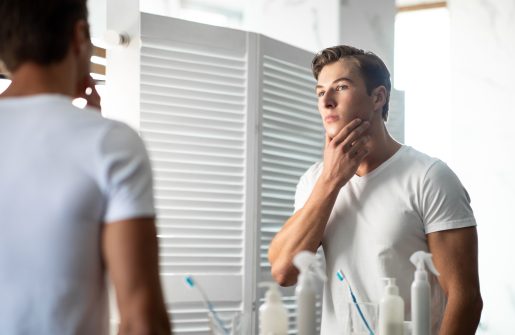 Self-care is important, but when does it become excessive? Looksmaxxing, a social media trend targeted toward teenagers and young adults (specifically young men), is an unrealistic practice focused on maximizing physical attractiveness. The practice sets unrealistic expectations for appearance and links one’s sense of self to appearance, manifesting in body dysmorphic disorder.
“One of the key features in body dysmorphia is someone has an excessive concern about a perceived extremely slight defect or flaw in appearance that causes significant distress and a desire to undo or fix the perceived defect,” said Dr. Eric Storch, professor and vice chair of psychology in the Menninger Department of Psychiatry and Behavioral Sciences at Baylor.
Some of the extreme looksmaxxing actions promoted on social media include injections, bone breaking to achieve a certain appearance and cosmetic surgery. This level of invasiveness and aggression draws major attention to this phenomenon. These are drivers of body dissatisfaction that can result in not just seeking out a cosmetic surgery, but repetitive cosmetic surgeries. Other symptoms of body dysmorphia include anxiety, depression, significant increased rates in suicidality and substance use.
Young people should pay attention to hygiene and self-care, but the key difference between self-care and looksmaxxing is the degree of distress and impairment. Breaking bones in the face to achieve a jawline or seeking excessive cosmetic surgery depicts a sense of significant distress and associated impairment.
“Those are key features of what can define having an adaptive or normal sense of self-reflection versus something that encroaches into the domain of being a problem,” Storch said. “If distress is the primary driver for seeking a cosmetic change, that can become potentially impairing as it is often difficult to realize appearance goals that are often unrealistic.”
Looksmaxxing promotes an idealized persona that is not based on reality to define what is attractive or desirable, and its effect is no different from the negative impact of social media overall. It targets young males, whereas young females have previously been the focus of social media trends. Internet and social media content used to be limited, but with the abundant content available now, the magnitude of the message is strong.
Teens and young people share and observe things from their parents and society as a whole; but parents can send a healthy message through their own actions. For example, a parent with an imperfect quality can model how to accept and embrace themselves regardless of appearance. Send a message to your kids that you are happy with who you are, even if something is not perfect.
Storch emphasizes that it is a normal, developmental occurrence in teenagers to place a focus on appearance but cautioned that parents should look for excessive actions, distress and impairment. Keep social media access limited and be mindful of what kids and adolescents watch. Try to limit overall exposure and keep an open forum for communication.
“For parents, it’s talking about themselves, but also providing feedback to their kids about the good that they do, the parts they love, and the message that ‘you are fantastic as you are,’” Storch said. “Figure out the moments where you can engage a kid. Talking about what’s happening can be a really helpful way of curtailing some of this.”
By Homa Warren