
Stress through the decades: A guide to coping at any age
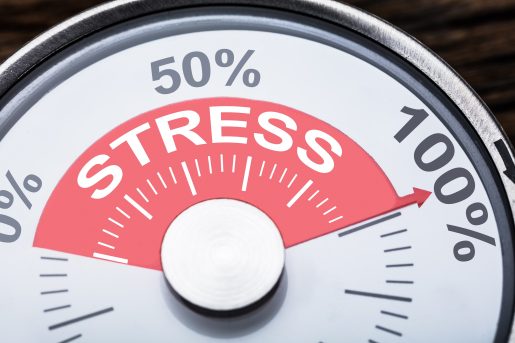 Stress is defined by the World Health Organization as a “state of worry or mental tension caused by a difficult situation.” It is a common, natural physiological response to various challenges, and it can impact people of all ages: Consider a little one worried about going to sleep without a parent close by, or an older adult feeling disconnected from a partner or community.
Dr. Eric Storch, clinical psychologist, professor and vice chair of the Menninger Department of Psychiatry and Behavioral Sciences at Baylor College of Medicine, explains how the nature of stress evolves as we become older:
“The stakes often become higher as people age; the topics often differ, as well as the ability to control the situation. Furthermore, our cognitive abilities shift – which can be a good or less positive thing – impacting our ability to cope with stressors.”
Although the types of difficult situations we face and how we respond to them may vary by the individual, healthy stress management is important, no matter your age.
Early childhood & adolescence
Children can be affected by various stressors, such as changes in family status, developing social relationships in school, and learning to balance homework with extracurricular activities. During these formative years, it’s important to help your child establish early stress management strategies, which can include deep breathing and grounding exercises, guided imagery, or offering an outlet for creative expression and physical activity.
As children transition into their teenage years, developmentally driven changes like puberty and sense of self-esteem, social stressors connected to relationships and peer pressure, and increasing educational demands, can impact them in different ways. During this period, additional coping strategies include encouraging healthy social relationships and setting digital boundaries.
Young adulthood
According to Storch, “Young adults are having to contend with a rapidly evolving world that challenges assumptions about work, relationships and life.”
During young adulthood, many individuals find themselves taking more steps toward becoming fully independent but face multiple challenges along the way. They’re starting professional careers while learning about the possibility of job insecurity and managing finances, as well as how to develop and maintain different types of relationships as adults.
Storch adds, “This, quite understandably, is difficult for anyone. Plus, they have that ‘mid-life crisis’ to look forward to!”
Storch is referring to the phenomenon known as the “quarter-life crisis,” the period when early adults “begin to show indicators of anxiety and uncertainty about making future career decisions.” Although the concept of making significant decisions seems daunting, young adults can help manage the stress and anxiety associated with them by practicing mindfulness and cognitive reframing, the latter a technique designed to help you shift your perspective on challenging situations from a negative or neutral view to a positive one.
As this age group enters their 30s, these coping mechanisms, in addition to focusing on self-care, setting boundaries, and relying on family and peers for support, will be beneficial for ongoing stress management.
Middle age
This is the period adults find themselves navigating complex, overlapping responsibilities, such as caring for aging parents, raising children and working. Therefore, it is no surprise that the act of balancing all these things can lead to notable levels of stress.
“The availability of support systems, presence and effectiveness of coping strategies and life meaning … When these things are not in a good place, stress can take an additional toll,” Storch notes.
However, there are ways to manage it. “Besides good daily self-care, I find that scheduling breaks (i.e., vacations, mini vacations) and engaging in activities that provide meaning are very helpful in managing stress,” Storch adds.
Sixties and beyond
While most anticipate the 60+ retirement years to be “stress-free” because of the transition out of the workforce and empty nesting, the reality is quite different. Because a career, raising children, and being a caregiver are no longer focal points, retirees often find themselves at a crossroads as to what their new purpose is.
“It’s a pretty big life change indeed,” Storch says. However, there are a few ways we can cope with the shift. “Replace the activity or meaning achieved from work – and the connections it provides – with other forms of meaning, such as hobbies and interests, time with loved ones and giving back.”
How to cope with stress over time
Of course, the types of challenges you experience won’t always have a direct correlation with your age. For example, “Relationships, which of course come in different forms with age, are potential stressors that are common across the lifespan,” Storch says.
Regardless of your circumstances, if you feel like you’re stuck in a stressful environment or situation, Storch offers this final piece of advice:
“Try to control the things that you can … Work on your ability to reframe situations more adaptively and be sure to do things to take care of yourself – sleep, diet, exercise and time with loved ones help a lot!”
By Aries Payne