Optimizing sleep for female athletes
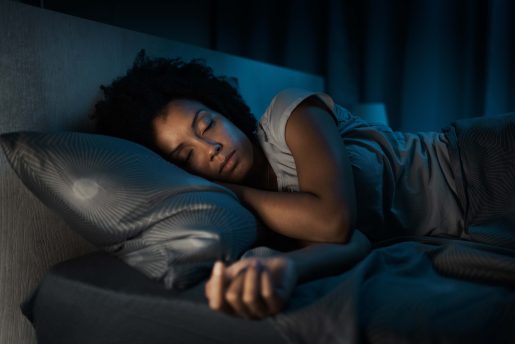 Sleep is a biological necessity contributing to all facets of health. Poor sleep duration is tied to cardiovascular risks, obesity, cardiometabolic disease and brain health. Optimizing sleep health, including duration, quality and regularity, is crucial for all, but especially athletes. Since sleep impacts women differently, female athletes should understand how sleep affects overall performance. A Baylor College of Medicine sleep psychologist explains how sleep impacts the body.
“When looking at studies in athletes, we see sleep quality and regularity impact reaction time and errors,” said Dr. Sara Nowakowski, associate professor of medicine at Baylor. “When we do sleep deprivation studies and take sleep away, we see decrements in performance. For Olympic athletes, even milliseconds matter for medaling. Sleep is a recovery tool and allows the body to optimize the next day’s performance.”
Data shows that cognitive behavioral therapy (CBT) for insomnia is effective in clinical trials compared to Ambien. While it takes more time for the body to adjust, CBT shows long-term efficacy over Ambien as a treatment for insomnia. Researchers are now looking at this data to improve sleep health for everyone, not just those with insomnia. According to Nowakowski, people should generally sleep seven-to-nine hours per night and should maintain regularity by sticking to the same duration everyday: “Don’t play catch up and sleep three or four more hours on the weekend.”
Olympic athletes maintain busy schedules, often working and training. Their time in bed matches the body’s capability. If they need seven hours, they should stick to that schedule and make time for sleep. The body has a circadian dip at around 1 to 3 p.m., and taking a 20-to-30-minute power nap (not a deep sleep) can be helpful to repower and recharge. Nowakowski also emphasizes the importance of light exposure in the morning, which resets the circadian rhythm every day.
“The area of the brain that regulates the circadian rhythm, the suprachiasmatic nucleus, is right behind the eye in the ocular nerve. So, for most people, getting light in the mornings is helpful to entrain the circadian clock within the first hour of waking,” she said.
Traveling can be tough on the body, and traveling east is harder for the body to adjust since it requires forcing an earlier bedtime. Nowakowski says to set the clock ahead of time to start waking up earlier if traveling east and spending about a week or more in that location. Upon arrival, take a timed, quick nap and remember exposure to light is crucial to get on that time zone. If the trip is short, avoid trying to get on that schedule.
“Everything about us is on a 24-hour clock: Digestion, blood pressure, sleep and even our physical performance,” Nowakowski said.
Females start reporting worse sleep once they go through puberty. Any period of hormonal fluctuation presents a risk for poor sleep. Tracking and knowing the menstruation cycle can be helpful.
“In the second half of the menstrual cycle after you ovulate and right around the period (premenstrual and a couple days into the period) is when you tend to see the most pain, sensitivity, worse sleep, worse mood and other PMS symptoms,” Nowakowski said.
Periods of pregnancy, postpartum and menopause also present greater risk for sleep and mood to go awry.
Understanding the circadian rhythm throughout the lifespan can benefit Olympic athletes, especially female Olympic athletes, in their performance and overall health. Those who struggle with sleep should see a sleep psychologist for sleep disorder treatment.
“Sleep psychologists focusing on behavioral sleep health are around, and a lot of people don’t know we exist. If people are having problems, we are here for people to seek help,” Nowakowski said.
By Homa Warren