Holiday lights affecting your eyesight?
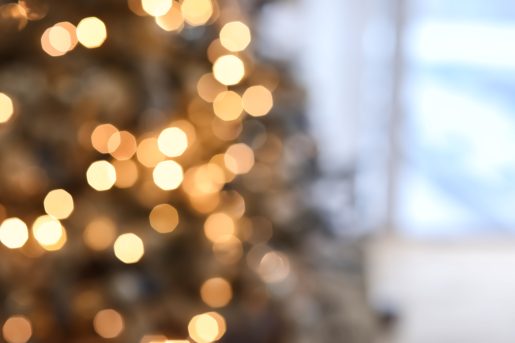 Picture this: You’re out with family or friends to look at holiday lights around the city. When you see them, you notice the lights seem blurred or that a halo appears above them. This means your eyes could have astigmatism. Dr. Sumitra Khandelwal, an ophthalmologist at Baylor College of Medicine, explains what astigmatism is and how you can treat it for your best holiday views.
“Astigmatism is what happens when the cornea has more of a football shape than a spherical shape. It causes blurry vision, especially when you have higher amounts of astigmatism, but more importantly, it causes distortion of vision,” Khandelwal said.
Khandelwal adds that some people may not even know they have astigmatism. They may think their vision is pretty good, but they squint a lot.
“Sometimes they have eye strain or headaches because they are trying to look past the distortion,” Khandelwal said.
If you have astigmatism, your vision while looking at holiday lights may be similar to what you see while driving at night. You might see:
- A halo around the holiday light.
- A streak either to the right or left of the light.
- “Starbursts” around the light.
- Overlapping lights.
Regular astigmatism often can be corrected with glasses or a simple contact lens prescription. Irregular astigmatism is harder to fix. This will need special contact lenses or even surgery.
“When you give a patient a prescription for glasses or contact lenses that have astigmatism correction or even if surgery is performed, they then comment on how everything is so much crisper, straighter and activities like reading and driving are easier. Another common comment is their night vision is better,” Khandelwal said.
New treatment options for astigmatism including cornea and lens-based procedures like SMILEPro, EVO ICL and intraocular lens exchange. You can learn about these treatment procedures performed by Baylor ophthalmologists here.
By Taylor Barnes