Human ‘mini-noses’ help understand why RSV infections are more severe in children than in adults
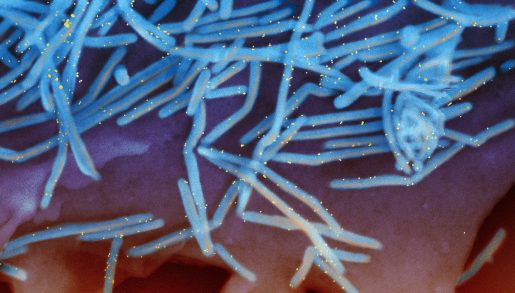
An infection with respiratory syncytial virus (RSV) typically affects infants much harder than adults. While adults usually experience RSV as a mild cold, infants can develop more severe conditions, including life-threatening pneumonia. Globally, RSV is one of the most common causes of severe lung infections in babies and young children and is responsible for thousands of hospitalizations and deaths in infants every year.
Why does RSV affect babies more severely? To better understand the cellular reasons behind this age-related difference, a team at Baylor College of Medicine compared infant and adult human nose organoids, also called mini-noses, regarding their susceptibility and response to infection. Their findings appeared in the Journal of Infection.

“Human nose organoids are tiny lab-grown models of nasal tissue that mimic the real airway lining,” said co-first author Dr. Divya Nagaraj, postdoctoral associate of molecular virology and microbiology in Dr. Pedro Piedra’s lab. “Mini-noses include the same cell types present in the lining of a human nose: ciliated cells with hair-like structures that sweep away mucus; basal cells, which are stem-like cells that regenerate tissue; goblet cells, which produce mucus; and rare types like ionocytes and tuft cells. Studying RSV in real human airways is difficult, so we worked with human organoids developed at Baylor’s 3D Organoid Core to study RSV infection in a realistic setting without invasive procedures.”
“To develop nasal organoids, we swabbed the inside of the nose from both infants and adults and grew the cells of each swab into 3D ‘mini-tissues,’” said co-corresponding author Dr. Sarah Blutt, professor of molecular virology and microbiology. “We optimized the methods necessary to keep the organoids healthy and ready for RSV infection.”
When the researchers compared infant and adult organoids before infection they found major differences. For instance, the cells in infant organoids divided and grew faster than those in adult organoids. Infants had unique cell types not seen in adults, including a group of basal cells called aberrant basaloid cells, which seem to be in an epithelial-mesenchymal transition state.
Infants also had more secretory, or mucus-producing, cells, which may explain why RSV infections in babies often involve thick mucus that clogs the airways,” Nagaraj said.

“We also made new discoveries regarding the types of cells RSV infects,” said co-author Dr. Vasanthi Avadhanula, assistant professor of molecular virology and microbiology. “We confirmed that ciliated cells are the major target, but also found that primary ciliary cells, a subtype of ciliated cells, were the main site of RSV replication in both adults and infants. This is a new discovery.”
“In infants, RSV didn’t stop at ciliated cells. It also infected basal cells and ionocytes, rare cells involved in regulating airway fluid. These infections were not seen in adults,” said Piedra, co-corresponding author and professor of molecular virology and microbiology. “This broader ‘tropism’ or range of target cells in infants may be associated with RSV causing more severe disease in young children.”
After infection, RSV triggered dramatic changes in the airway lining. It promoted the loss of ciliated cells, which normally clear mucus and debris. Their destruction likely contributes to mucus build up, making breathing harder. The infection also increases mucus-producing goblet cells, especially in infants. In adults, goblet cells increased too, but less dramatically. At the same time, RSV infection decreases club cells, which help maintain airway health. Their reduction may worsen inflammation and tissue damage.
Infected infant organoids strongly shifted toward mucus production, which matches clinical observations of severe airway blockage in babies with RSV,” Nagaraj said.
The researchers also looked into how the organoids fought back infection. “Both adult and infant cells activated antiviral and inflammatory pathways, but infants had a less coordinated response,” Piedra said.
Some infant cells showed signs of stress and inflammation without effectively stopping the virus. This weaker defense may contribute to RSV’s spread in young airways.”
The findings represent a step toward a more effective personalized RSV care by providing the first detailed cell atlas of RSV infection of the human nose – the primary site of this viral infection – and revealing age-related differences that influence which cells RSV infects and how the body responds.
Understanding these age-specific patterns could lead to better treatments tailored for infants, who bear the brunt of RSV’s impact.
The work also highlights the power of organoid models to study respiratory diseases at the cellular and molecular levels to understand disease mechanisms and to pave to way for safer more targeted therapies.
Other contributors to this work include co-first authors Anubama Rajan and Carolyn Bomidi, as well as Gina M. Aloisio, Ashley M. Murray, Emily M. Schultz, Amal Kambal, Mary K. Estes and Erin Nicholson, all at Baylor College of Medicine.
This work was supported by funds from the National Institutes of Health (NIH) grants U19 AI116497 and U19AI144297. This project was supported in part by the Genomic and RNA Profiling Core at Baylor College of Medicine with funding from the NIH S10 grant 1S10OD036427, Cytometry and Cell Sorting Core at Baylor College of Medicine with funding from the CPRIT Core Facility Support Award CPRIT-RP180672, the NIH (grants P30 CA125123 and S10 RR024574) and the Integrated Microscopy Core at Baylor College of Medicine and the Center for Advanced Microscopy and Image Informatics (CAMII) with funding from NIH (DK56338, CA125123, ES030285, S10OD030414), and CPRIT (RP150578, RP170719).
By Ana María Rodríguez, Ph. D.
Follow From the Labs on X, BlueSky and Instagram!