Want to stimulate collagen in your face? Try microneedling!
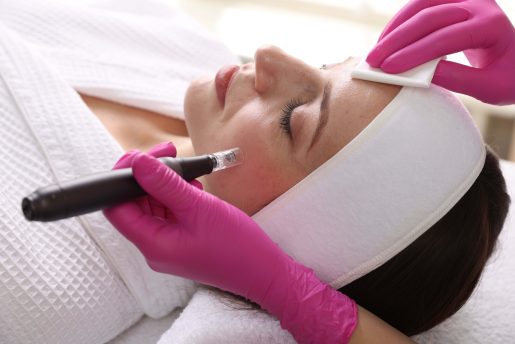 Microneedling or collagen induction therapy is a cosmetic procedure where 12 tiny needles move up and down on your skin, creating microchannels to pierce the skin. In addition to stimulating collagen, it can also help soften fine lines.
“That’s one part of it,” said Kim Chang, an aesthetician at Baylor College of Medicine. “It also evens out minor acne scarring and hyperpigmentation, including breaking up sun damage.”
Due to the needles piercing your skin, your face could appear red after the procedure. Then it will fade to look and feel like a mild sunburn. You’ll fully heal in about 10-to-14 days.
“Depending on the goal, a patient will see results within three to six of microneedling treatments. If a patient’s goal is to rejuvenate for glowing skin, one treatment is usually sufficient; adding more treatments would allow for more correction.” Chang said.
There are two types of microneedling procedures that Chang performs at Baylor:
- Basic microneedling
- Platelet-rich plasma (PRP) microneedling
Before each procedure, Chang makes sure the skin is numb.
“For PRP microneedling, I draw blood from the patient, centrifuge it, then extract their PRP that contains growth factors which stimulate the body’s existing stem cells for tissue repair. I then apply it to the skin and start the microneedling procedure. PRP adds for speedier recovery time,” Chang said.
She adds that all cosmetic procedures require maintenance, so to see better results from microneedling, you most likely need to have a series of appointments once or twice a year.
Possible side effects of the procedure include bruising from skin piercing or post-inflammatory hyperpigmentation (PIH). With darker skin tones, sometimes the reverse happens, and you can develop hyperpigmentation.
“PIH is not permanent and will go away over time because it is induced trauma,” Chang said.
By Taylor Barnes