Skip to content
Saturday, June 13, 2026
Latest:
  • Researchers studied female Rett syndrome in detail for the first time
  • What is fiber?
  • Study proposes reconsidering how histone deacetylase inhibitors work in cancer treatment
  • Take a bite out of summer with seasonal produce
  • Summer, Sun, and…Screens, oh my!
Baylor College of Medicine Blog Network

  • Home
  • Momentum
    • About Momentum
    • Resources
    • Contributors
      • Taylor Barnes
      • Dana Benson
      • Molly Chiu
      • Julie Garcia
      • Graciela Gutierrez
      • Anna Kiappes
      • Aries Payne
      • Andy Phifer
      • Homa Warren
      • Melissa Tucker
    • Contact Us
  • From The Labs
    • About From the Labs
    • Follow From The Labs on Twitter
  • Policywise
    • About PolicyWise
    • Follow @BCMEthics on Twitter
  • The Stitch
    • About The Stitch
  • Progress Notes
    • About Progress Notes
    • Progress Notes Editors
    • Connect With Us
  • bcm.edu

Orthotics and Prosthetics Program

A close up of the Cullen Building at Baylor College of Medicine, the academic home for our students
Momentum

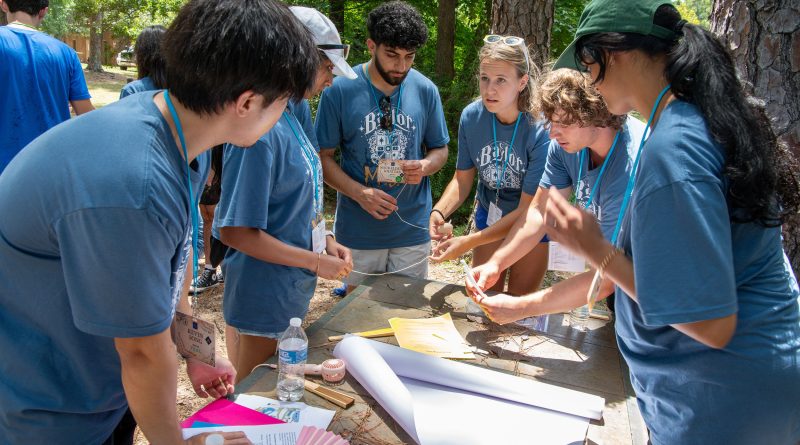
Welcome new School of Medicine, Graduate School and School of Health Professions students!

July 28, 2025 Genetic Counseling Program,  Graduate School for Biomedical Sciences,  new students,  Orthotics and Prosthetics Program,  Physician Assistant Program,  School of Health Professions,  School of Medicine

Learn more about our newest students in the School of Medicine, Graduate School of Biomedical Sciences and School of Health Professions.

Read More
Momentum

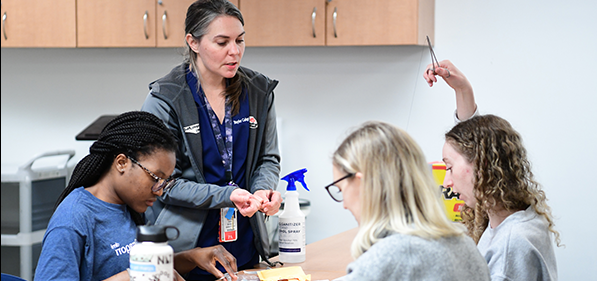
Welcome new School of Health Professions students!

June 20, 2022 By The Numbers,  Orthotics and Prosthetics Program,  Physician Assistant Program,  School of Health Professions

Baylor extends a warm welcome to the new Physician Assistant Program and the Orthotics and Prosthetics Program students!

Read More

From the Labs: Image of the Month

two distinct neuronal populations in separate compartments of a microfluidic device. On the left, neurons express the 4R tau form (pink), which is associated with toxicity in Alzheimer’s disease, while on the right there are neurons from healthy individuals expressing normal tau (blue). In the central microgroove region of the device, neurons extend axons between the compartments. From the Labs: Tau travels between neurons

Healthy Habits: A DOC-umentary Series

https://www.youtube.com/watch?v=SlNiMWHUhbc

Archives

Search

©1998 - 2023 Baylor College of Medicine®
One Baylor Plaza, Houston, Texas 77030
(713) 798-4951