Safe sleep and SIDS prevention
Dr. Russell Ray, associate professor and McNair Scholar at Baylor College of Medicine and director of the Isabel Davis Center for Safe Children at Texas Children’s Hospital, along with his colleague Dr. Savannah Lusk, assistant professor and co-director, Isabel Davis Center for Safe Children, share the importance of Safe Sleep and SIDS Prevention Awareness Month.
Question: What is SIDS?
Answer: SIDS stands for sudden infant death syndrome. It is the sudden death of a baby younger than one year that remains unexplained after a complete autopsy, investigation of the death scene and review of the baby’s medical history.
SIDS is part of a broader category called sudden unexpected infant death, or SUID. SUID describes a sudden and unexpected infant death whose cause is not immediately apparent. After investigation, a death may be classified as SIDS, remain undetermined or be explained by accidental suffocation or another cause. SIDS and accidental suffocation are different diagnoses.
Q: October is Safe Sleep and SIDS Prevention Awareness Month. What is the goal with bringing attention to this important issue?
A: Our message is about education and support. We want every caregiver to know how to reduce the risk of sleep-related infant death, beginning before a baby is born. Clear, consistent education needs to be paired with practical support so families can follow safe-sleep recommendations.
This month also gives us an opportunity to remember the babies who have passed away, support their families and draw attention to the need for continued research. Reducing these deaths is a shared responsibility that includes families, health professionals, researchers and communities.
Q: What are other sleep-related health issues that infants might face?
A: Other sleep-related dangers include accidental suffocation, entrapment or strangulation. A baby can become trapped between surfaces or have their breathing impaired by soft bedding or other hazards in the sleep space. These deaths are distinct from SIDS, but safe-sleep practices help reduce the risk of both.
Some babies, including those born prematurely or at a low birth weight, are more vulnerable to sleep-related death. Because we cannot reliably identify every baby at risk, safe-sleep guidelines apply to all infants.
Q: How many infants die from sleep-related issues per year?
A: According to the CDC, about 3,400 babies in the United States died suddenly and unexpectedly in 2024, or approximately nine babies every day. That SUID total includes SIDS, deaths of unknown cause, and accidental suffocation and strangulation in bed. In Texas, from 2018 to 2023, we experienced the loss of 2,028 infants before their first birthday to SUID. In those same years, we lost 1,524 to motor vehicle crashes, 1,282 to homicide, 1,095 to suicide, and 963 to cancer in children up to 18 years old. These numbers reflect the public health crises we face when it comes to sleep-related deaths in infants.
Behind every number is a child and a family facing a devastating loss. That continuing toll is why safe-sleep education, family support and research remain so important.
Q: Can SIDS be prevented?
A: There is no way to guarantee that SIDS will not occur, but parents and caregivers can take well-established steps to reduce the risk. Safe-sleep practices also reduce hazards that can cause accidental suffocation and other sleep-related deaths.
Babies who die from SIDS often appeared healthy beforehand, and researchers are working to understand underlying biological vulnerabilities. A SIDS death does not, by itself, mean a caregiver did something wrong. Families deserve compassion, support and answers wherever possible.
Q: What can parents do to protect children?
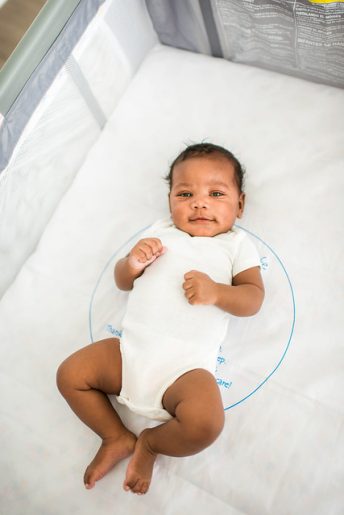
A: For every nap and nighttime sleep during the first year, place your baby on their back in a crib, bassinet or play yard that meets safety standards. Use a firm, flat, level mattress with only a fitted sheet. Keep pillows, loose blankets, bumpers, toys and sleep positioners out of the sleep space. Only your baby should be in the sleep space.
Share a room with your baby for at least the first six months, with the baby on a separate sleep surface. Adult beds, sofas and armchairs are not safe sleep spaces for infants.
A useful reminder is the ABCs: Alone in their own sleep space, on their Back, in a clear Crib. “Alone” means a separate sleep surface, not a separate room.
Risk reduction begins during pregnancy with regular prenatal care and avoiding alcohol, smoking, secondhand smoke and thirdhand smoke. After birth, keep your baby’s surroundings smoke- and vape-free, avoid overheating and make sure caregivers are not impaired by alcohol or drugs. Importantly, this applies to both cigarette and marijuana smoke.
Breastfeeding or providing expressed breast milk, when possible, is associated with a lower risk of SIDS. Offer a pacifier at naps and bedtime; if your baby breastfeeds directly, wait until breastfeeding is well established. Follow well-child care and immunization recommendations. Consumer breathing and heart-rate monitors have not been shown to prevent SIDS and do not replace safe-sleep practices.
Make sure every caregiver who cares for your baby follows the same safe-sleep plan.
Q: What research is being done at Baylor/Texas Children’s to help prevent SIDS and other sleep-related deaths?
A: At Baylor College of Medicine and Texas Children’s Hospital, we are studying why some infants are more vulnerable to sudden death and how that knowledge might help protect them. Our laboratory combines animal studies, population research, and analysis of human biological samples to investigate the systems that control breathing, heart function and waking from sleep.
We are investigating potential biomarkers, measurable biological indicators. that might eventually help identify infants at increased risk through newborn screening. These markers would need rigorous validation before clinical use. We also aim to establish a genetic and tissue biobank to study samples from infants who have died and connect those findings with our research.
Complementary work in pediatrics by Drs. Kimberly Lopez, Angela Bachim and Christopher Greeley use CDC-supported surveillance to better understand the circumstances surrounding infant deaths and inform prevention. Dr. Huda Zoghbi‘s research on neurodevelopment and the brain circuits that establish and maintain breathing also helps inform questions about biological vulnerability.
Our goal is to turn a better understanding of these deaths into more effective ways to identify risk and protect infants, while supporting families affected by loss.
By Gracie Gutierrez
Note: Lusk is also a SIDS Family Service Provider Representative with Texas State Child Fatality Review Team and a research analyst for the Harris County Child Fatality Review Team