Thyroid 101
 It’s a small gland in the front of your throat that plays a big role in controlling your body’s everyday functions, but what exactly does the thyroid do, and how do you know if it’s over or underperforming? Dr. Ruchi Gaba, endocrinologist and associate professor of medicine – endocrinology, diabetes and metabolism, answers some common questions about this little powerhouse and when you should see your doctor.
Question: What does your thyroid do?
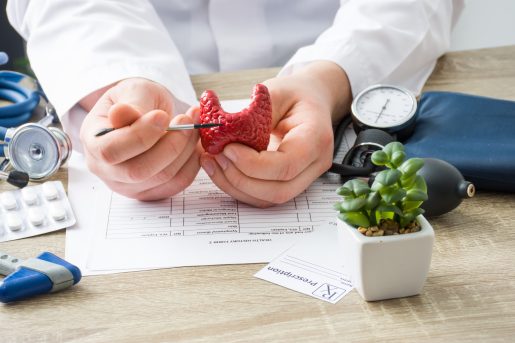
Answer: Thyroid is a small butterfly-shaped gland located at the front of your neck. The thyroid has two lobes; each located on either side of your windpipe. The gland produces thyroid hormone that helps regulate the body’s metabolism. Specifically, it regulates your metabolic rate, controlling your heart, digestion, muscle function, bone maintenance and even brain development.
Q: What hormones does it make/release, and how do those impact your health?
A: The thyroid mainly makes two hormones: T4 (thyroxine) and T3 (triiodothyronine). These hormones help regulate your metabolism, body temperature, energy level and heart function. The thyroid also makes calcitonin, which helps regulate calcium and bone health. When thyroid hormone levels are too high or too low, it can affect nearly every organ in the body.
Q: How do you know if it is underperforming or overperforming? Are there certain symptoms people should be aware of?
A: An underactive thyroid (hypothyroidism) slows metabolism down. Common symptoms include fatigue, weight gain, feeling cold, constipation, dry skin, hair thinning and brain fog.
An overactive thyroid (hyperthyroidism) speeds up the metabolism. Symptoms may include weight loss, rapid or irregular heartbeat, anxiety, tremors, heat intolerance, sweating and trouble sleeping.
Because these symptoms can overlap with many other conditions, a simple blood test is needed to confirm a thyroid problem.
Q: Should you get your thyroid levels checked regularly or just when you suspect a problem?
A: The American Thyroid Association recommends that adults consider thyroid screening starting at age 35 and repeating it every five years, especially for women. That said, routine screening for everyone isn’t universally recommended. Testing is strongly advised if you have symptoms, a family history of thyroid disease, autoimmune conditions, pregnancy or other risk factors.
Q: How do you treat hyperthyroidism?
A: Treatment depends on the cause and severity. Options include anti-thyroid medications, radioactive iodine or surgery. The goal is to safely lower thyroid hormone levels and relieve symptoms. Your doctor will tailor treatment to your individual situation.
Q: How do you treat hypothyroidism?
A: Hypothyroidism is treated with thyroid hormone replacement, most commonly levothyroxine. This replaces the hormone your body isn’t making enough of and helps restore normal metabolism. Treatment is usually long-term and requires periodic blood tests to adjust the dose.
Q: Can you develop a thyroid condition later in life, or is it something you’re born with?
A: Yes, many people develop thyroid disease later in life. While some individuals are born with thyroid problems, the most common conditions, like Hashimoto’s disease or Graves’ disease, develop over time, often due to autoimmune causes. Women are especially affected. About one in eight women will develop a thyroid condition during their lifetime.
Q: Are there other thyroid conditions people need to be aware of?
A: Yes, in addition to overactive and underactive thyroid disease, people should be aware of thyroid nodules, goiter (thyroid enlargement) and thyroid cancer. Most thyroid nodules are benign, but they should be evaluated to rule out cancer or hormone overproduction.
Q: When should the thyroid be removed?
A: The thyroid may need to be removed for thyroid cancer, large goiters causing trouble with breathing or swallowing, an overactive thyroid that does not respond to other treatments or nodules that are suspicious for cancer. Surgery may be recommended when symptoms are significant or when cancer is diagnosed or strongly suspected.
Q: Is there anything else about the thyroid you wish people knew?
A: Yes, thyroid disease is common, treatable and often missed. Many people live with symptoms for years before being diagnosed. If something does not feel right, trust your body and ask for testing. A small gland can have a big impact on how you feel every day.
By Anna Kiappes