A landmark achievement in robotic heart surgery at Baylor St Luke’s Medical Center
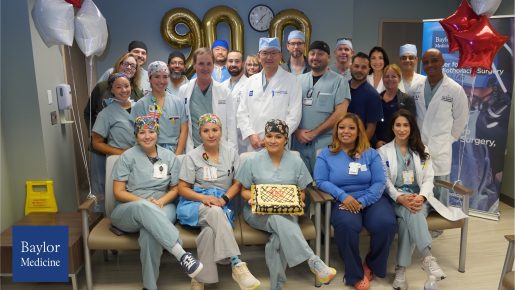 Dr. Kenneth Liao, chief of Cardiothoracic Transplantation and Circulatory Support at Baylor College of Medicine, has reached a historic milestone with the completion of his 900th robotic heart surgery in early December. This achievement solidifies Baylor Medicine’s leadership in advanced, minimally invasive heart surgery in Texas.
Liao leads one of the largest robotic heart surgery programs in Houston at Baylor St. Luke’s Medical Center. For patients across the region and beyond, this milestone represents more than a number. It reflects years of surgical innovation and dedication by his team to improving outcomes and recovery for patients with complex heart disease.
“Reaching 900 robotic heart surgeries in less than 6 years is a reflection of the trust our patients place in us and the incredible work of our entire team,” Liao said. “Robotic surgery allows us to treat serious heart conditions with less trauma to the body, faster recovery and better clinical outcomes. Our goal has always been to push the field forward while keeping the patient at the center of everything we do.”
Advancing possibilities
Robotic heart surgery has transformed the way many cardiac procedures are performed. Using advanced robotic technology, Liao can operate through small incisions between the ribs, avoiding the need for a traditional sternotomy in many cases. This approach can reduce pain, blood loss, hospital stays and recovery time for the right patients.
Liao and his team perform a wide range of heart surgeries robotically, including:
- Mitral valve repair and replacement
- Tricuspid valve repair
- Coronary artery bypass surgery, including single and multi-artery bypass in select patients
- Aortic valve repair and replacement in select patients
- Atrial and ventricular septal defect closures
- Removal of benign cardiac tumors
- Procedures for atrial fibrillation in combination with valve surgery
- Heart transplantation in select patients
By expanding the scope of what can be done robotically, the program continues to offer patients innovative options previously available only through open-heart surgery.
A team effort
Behind every successful robotic surgery is a highly skilled, multidisciplinary team. Nurse Practitioner Maria Piero, who works closely with Liao and patients throughout their surgical journey, emphasized the importance of comprehensive, patient-centered care.
“Patients often come to us feeling anxious about heart surgery,” said Pinero. “Being able to offer a robotic approach helps ease many of those fears. We spend a lot of time educating patients, answering questions and supporting them before and after surgery. Seeing how quickly many of them recover is incredibly rewarding.”
Pinero added that milestones, such as the 900th robotic surgery, also are meaningful for the care team.
“This milestone speaks to the consistency, safety and outcomes of the program. It is exciting to be part of a team that is constantly growing and setting new standards for cardiac care in Texas and in the U.S.”
Looking ahead
As Liao approaches his 1,000th robotic heart surgery, the program continues to attract patients from across Texas and beyond. “We continue to refine our skills and techniques, broaden what we can offer robotically, and deliver the best possible outcomes for our patients for years to come,” Liao said. “As one of the largest academic heart surgery training programs in the nation, we are positioned to train and mentor the next generation of cardiac surgeons with robotic skills and reshape the future of heart surgery.”
By Kelsey Scott, communications associate in the Michael E. DeBakey Department of Surgery